
We are early in 2024, and the business landscape is more competitive than ever. Businesses must understand and cater to their customer’s needs at each stage of their buying process.
Businesses can effectively guide and influence potential customers by tailoring content strategies to the buyer’s journey, increasing sales and brand loyalty.
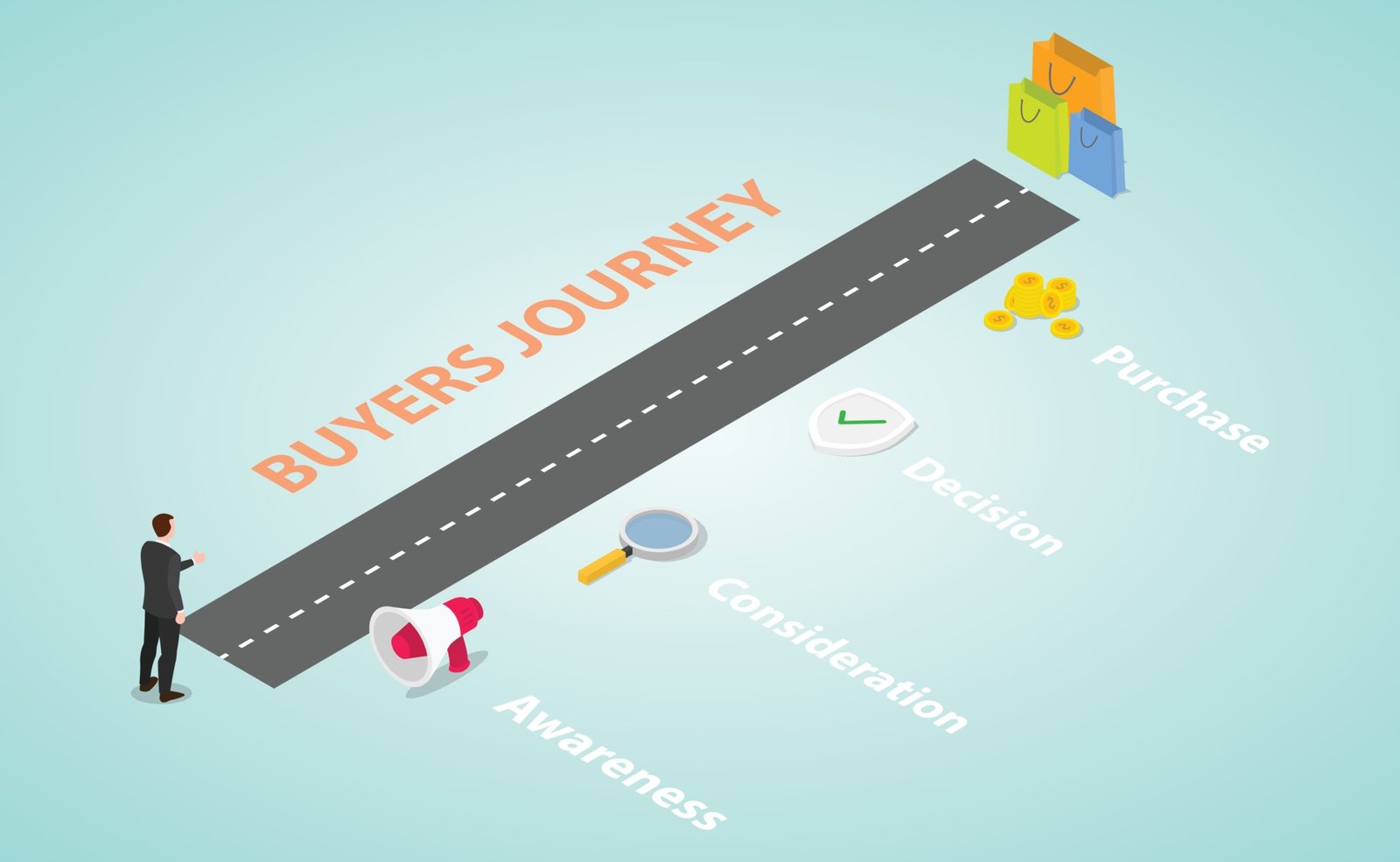
Before getting into the details, let’s start by understanding the buyer’s journey. It consists of three key stages: awareness, consideration, and decision.
In the awareness stage, potential customers become aware of their problem and seek information to address it.
In the consideration stage, they weigh different options and explore possible solutions, highlighting the importance of tailoring content for each stage to address the potential buyer’s concerns.
Finally, in the decision stage, they make a final purchase decision.
Now, let’s examine why creating content for the buyer’s journey is vital. Businesses can effectively engage potential customers, address their pain points, and build trust by catering to each stage.
However, succeeding in creating content for the buyer’s journey requires a well-planned strategy and understanding of your target audience.
Table of Contents
The buyer’s journey in marketing is a fundamental concept that encompasses the entire process customers go through, from the initial stage of being unaware of a problem to finally making a purchase decision.
Businesses must deeply understand the different stages of the buyer’s journey to create compelling content that resonates with potential customers.
Content marketing stages play a crucial role in guiding customers toward purchasing. These stages are often referred to as the customer journey. They include:
Businesses often use content mapping to cater to each stage of the buyer’s journey, ensuring that every piece of content is precisely targeted.
This involves aligning content with the relevant stages of the buyer’s journey, ensuring that the correct information is delivered to the right audience at the right time.
Content mapping enables businesses to guide customers through the buyer’s journey and build a strong relationship with them.
Remember: Understanding the buyer’s journey in marketing and mapping content to each stage is essential for businesses to guide customers toward purchasing, emphasizing the role of the marketer in this process.
By creating targeted and relevant content, businesses can effectively engage potential customers and establish themselves as trusted industry experts.
Creating content for the buyer’s journey is critical to a successful content marketing strategy. It serves as a roadmap to connect with your target audience and guide them toward making a purchase.
Businesses must understand their audience and create relevant content to avoid losing potential customers and missing out on valuable opportunities.
Content marketing is vital in engaging customers at different stages of their journey. It is considered highly important in overall marketing strategies.
By aligning your content with the buyer’s journey and ensuring each piece of content addresses the needs and challenges of your potential customers at each stage of their decision-making process, you can maximize engagement.
Having a well-defined content marketing strategy that caters to the buyer’s journey. It helps you deliver the right content to people at the right time.
However, developing an effective strategy can take time due to the complexity of the buyer’s journey and the diverse needs of your target audience.
To create a successful content marketing strategy for the buyer’s journey, consider the following tactics:
By following these content marketing tactics and implementing a well-rounded strategy, you can effectively engage potential customers throughout their buyer’s journey.
This will increase your chances of conversions and establish your brand as a trusted authority in your industry.
Regarding content marketing, catering to each stage of the buyer’s journey is essential for businesses to effectively engage potential customers.
By understanding the needs and desires of your target audience at each stage, you can create specific content that guides them toward making a purchase decision.
During the awareness stage, customers begin to realize they have a problem. They are actively seeking information and educational resources to better understand their situation.
To capture their attention, consider creating the following types of content:
By offering educational content during the awareness stage, you can position your brand as a trusted authority and establish a connection with potential customers.
Once customers have identified their problem, they enter the consideration stage, actively seeking different solutions and comparing options.
During this stage, you can create content that helps customers evaluate and understand the benefits of your products or services. Consider the following content ideas:
By providing valuable content that helps customers make informed decisions, you can establish credibility and build trust, increasing the likelihood of a purchase.
In the decision stage, customers have narrowed down their options and are ready to make a final purchase decision.
This is your opportunity to provide content that convinces them to choose your brand. Consider the following content ideas:
By offering content that addresses any remaining doubts or concerns, you can instill confidence in potential customers and drive them to purchase.
Successful content marketing considers the buyer’s journey and provides tailored content at each stage.
By understanding the needs and desires of potential customers, you can create content that guides them through the buyer’s journey and ultimately leads to conversions.
Understanding your target audience is critical when creating a successful content marketing strategy. This is where the buyer persona comes into play.
A buyer persona is a fictional representation of your ideal customer based on research and data.
By jumping deep into your target audience’s interests, pain points, and behaviors, you can create content that truly resonates with potential customers.
This tailored approach allows you to address their needs and provide valuable solutions throughout their buyer’s journey.
To develop a content strategy for the buyer’s journey, aligning your content with each journey stage is essential.
This ensures you provide the correct information at the right time, guiding potential customers towards successful engagement and conversions.
The buyer’s journey consists of three key stages: awareness, consideration, and decision.
Developing a content strategy that caters to each stage of the buyer’s journey requires careful planning and execution, including designing landing pages that convert.
By creating the right content for the right audience at the right time, you can effectively guide potential customers toward purchasing.
| Buyer’s Journey Stage | Content Types |
|---|---|
| Awareness | Blog posts, educational videos, social media content, ebooks |
| Consideration | Comparison guides, case studies, expert interviews |
| Decision | Product demos, testimonials, free trials |
By mapping out the types of content needed for each stage, you can ensure that you’re providing the right information and guidance to potential customers.
This content mapping approach optimizes your content marketing funnel, increasing the chances of successful conversions through strategically crafted social media posts and landing pages.
Remember, developing a content strategy for the buyer’s journey is an ongoing process. Continuously monitor and analyze your content’s performance, including social media posts and landing pages, to make informed adjustments and improvements, ensuring quality content delivery at every stage of the buyer journey.
With a well-crafted content strategy in place, you’ll be able to attract, engage, and convert potential customers throughout their buyer’s journey.
By mapping out the types of content needed for each stage, you can ensure that you provide the correct information and guidance to potential customers.
This content mapping approach optimizes your content marketing funnel, increasing the chances of successful conversions.
Remember, developing a content strategy for the buyer’s journey is ongoing. Continuously monitor and analyze your content’s performance to make informed adjustments and improvements.
With a well-crafted content strategy in place, you’ll be able to attract, engage, and convert potential customers throughout their buyer’s journey.
Creating content for every stage of the buyer’s journey is essential for businesses to attract, engage, and convert potential customers.
Businesses can guide customers toward purchasing by understanding the buyer’s journey and mapping content to each stage, effectively engaging the potential buyer.
This comprehensive approach allows companies to establish themselves as industry experts and build trust with potential customers.
Creating relevant and valuable content for the target audience is essential throughout the buyer’s journey.
Businesses can demonstrate their expertise and provide solutions that resonate with potential customers by addressing their specific needs and pain points at each stage.
This enables businesses to establish a strong connection with their audience and increase the likelihood of conversion.
A well-rounded content marketing strategy that caters to the buyer’s journey with quality content for each stage is the key to success.
By creating educational content in the awareness stage, informative and comparison-based content in the consideration stage, and persuasive content in the decision stage, businesses can effectively guide potential customers toward purchasing.
This strategic approach drives sales and fosters long-term customer loyalty and advocacy.
By understanding the buyer’s journey and consistently creating valuable content that addresses potential customers’ needs and interests, businesses can succeed in their content marketing efforts.
Guiding customers through the buyer’s journey builds trust, establishes credibility, and increases sales and business growth. Embracing the buyer’s journey as a guiding principle for content creation is essential in today’s competitive market.